Investigación
Mi trabajo combina el análisis de formulaciones variacionales con su discretización. Estas son las líneas principales, cada una con los artículos que le corresponden.
Poroelasticidad y acoplamientos multifísicos
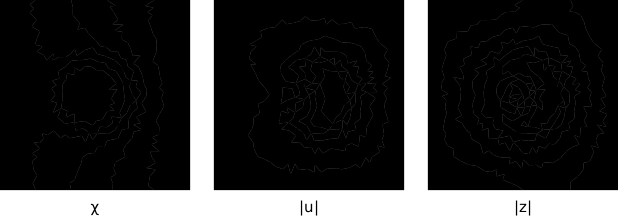
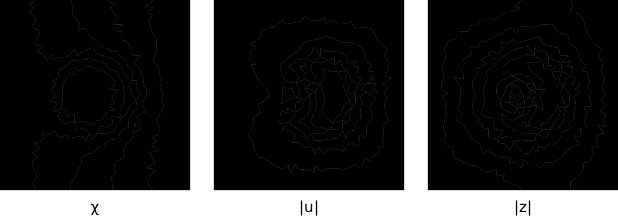
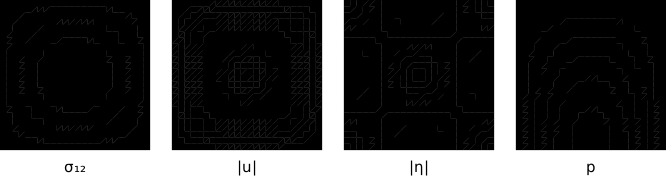
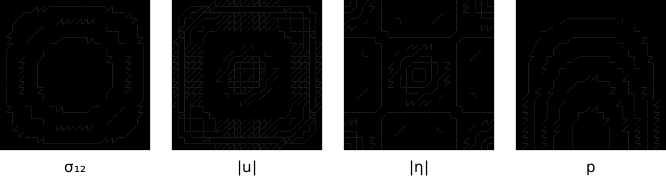
Estudio el modelo de poroelasticidad de Biot y sus acoplamientos con transferencia de calor, transporte electroquímico de Poisson–Nernst–Planck y flujo de Brinkman y Forchheimer. Las formulaciones utilizan la presión total e incógnitas de tipo pseudotensión, y están diseñadas para mantenerse estables en el límite casi incompresible, donde las discretizaciones estándar sufren bloqueo (locking). Las aplicaciones incluyen medios porosos deformables en ingeniería y el flujo de fluidos en tejidos biológicos.
Publicaciones relacionadas
-
2026
A five-field mixed formulation for the fully dynamic Biot–Brinkman model
ESAIM: Mathematical Modelling and Numerical Analysis, accepted
-
2026
A locking-free mixed-primal formulation for the Biot–Brinkman–Forchheimer model
Preprint 2026-9, GIANuC², Universidad Católica de la Santísima Concepción
-
2026
A pseudostress-based fully mixed finite element method for the stationary Biot–Poisson–Nernst–Planck system
Submitted
-
2026
A pseudostress-based fully mixed formulation for the unsteady Biot–Brinkman model
Preprint, GIANuC², Universidad Católica de la Santísima Concepción
-
2025
New Banach spaces-based mixed finite element methods for the coupled poroelasticity and heat equations
IMA Journal of Numerical Analysis, 45(4), 1936–1984
-
2025
Primal-mixed finite element methods for the coupled Biot and Poisson–Nernst–Planck equations
Computers & Mathematics with Applications, 186, 53–83
Flujo en medios porosos y fluidos incompresibles
Métodos de elementos finitos mixtos para las ecuaciones de Stokes, Navier–Stokes, Brinkman y Brinkman–Forchheimer, incluyendo términos convectivos, porosidad variable y elasticidad casi incompresible. El análisis se apoya en formulaciones en espacios de Banach, donde la integrabilidad natural de los términos no lineales determina el marco funcional.
Publicaciones relacionadas
-
2027
A priori and a posteriori error analysis of a mixed FEM for stationary convective Brinkman–Forchheimer flows with variable porosity
Journal of Computational and Applied Mathematics, 492, Article 118115
-
2026
A five-field mixed formulation for the fully dynamic Biot–Brinkman model
ESAIM: Mathematical Modelling and Numerical Analysis, accepted
-
2026
A locking-free mixed-primal formulation for the Biot–Brinkman–Forchheimer model
Preprint 2026-9, GIANuC², Universidad Católica de la Santísima Concepción
-
2026
A pseudostress-based fully mixed formulation for the unsteady Biot–Brinkman model
Preprint, GIANuC², Universidad Católica de la Santísima Concepción
-
2023
A Banach spaces-based fully-mixed finite element method for the stationary chemotaxis-Navier–Stokes problem
Computers & Mathematics with Applications, 145, 65–89
-
2022
A posteriori error analysis of Banach spaces-based fully-mixed finite element methods for Boussinesq-type models
Journal of Numerical Mathematics, 30, 325–356
-
2021
On the well-posedness of Banach spaces-based mixed formulations for the nearly incompressible Navier–Lamé and Stokes equations
Computers & Mathematics with Applications, 102, 87–94
-
2020
An augmented fully-mixed finite element method for a coupled flow-transport problem
Calcolo, 57
Transporte, difusión y su acoplamiento con la mecánica
Problemas acoplados en que una concentración o una temperatura es transportada por un flujo o impulsada por tensiones mecánicas: difusión asistida por tensiones, quimiotaxis–Navier–Stokes, modelos de tipo Boussinesq, sistemas de flujo–transporte y sedimentación asistida por calor. El buen planteamiento se obtiene usualmente mediante argumentos de punto fijo combinados con la teoría de problemas mixtos y monótonos.
Publicaciones relacionadas
-
2026
Mixed finite element methods for a heat-assisted model of sedimentation
arXiv preprint arXiv:2610.28903
-
2026
A pseudostress-based fully mixed finite element method for the stationary Biot–Poisson–Nernst–Planck system
Submitted
-
2025
New Banach spaces-based mixed finite element methods for the coupled poroelasticity and heat equations
IMA Journal of Numerical Analysis, 45(4), 1936–1984
-
2025
Primal-mixed finite element methods for the coupled Biot and Poisson–Nernst–Planck equations
Computers & Mathematics with Applications, 186, 53–83
-
2023
New Banach spaces-based fully-mixed finite element methods for pseudostress-assisted diffusion problems
Applied Numerical Mathematics, 193, 148–178
-
2023
A Banach spaces-based fully-mixed finite element method for the stationary chemotaxis-Navier–Stokes problem
Computers & Mathematics with Applications, 145, 65–89
-
2022
A posteriori error analysis of Banach spaces-based fully-mixed finite element methods for Boussinesq-type models
Journal of Numerical Mathematics, 30, 325–356
-
2022
A pseudostress-based mixed-primal finite element method for stress-assisted diffusion problems in Banach spaces
Journal of Scientific Computing, 92
-
2020
An augmented fully-mixed finite element method for a coupled flow-transport problem
Calcolo, 57
Análisis de error a posteriori y adaptatividad
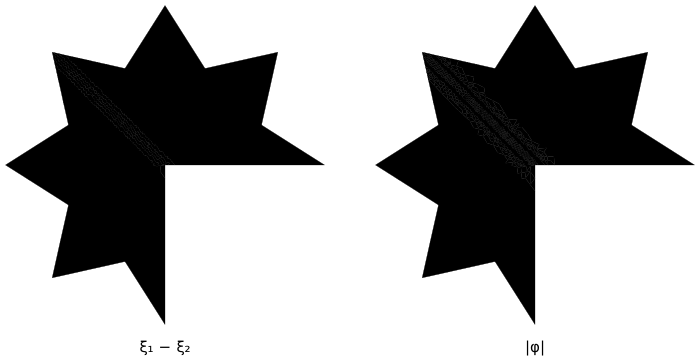
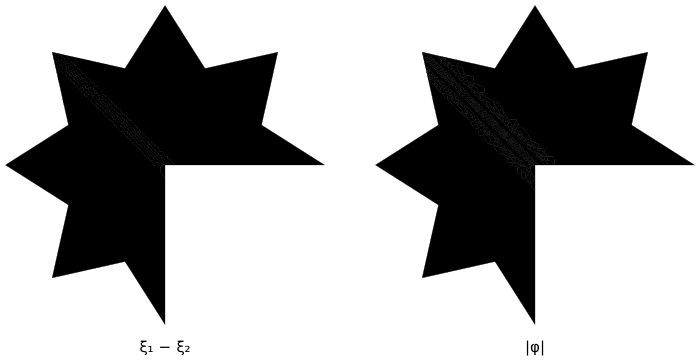
Estimadores de error a posteriori de tipo residual para métodos totalmente mixtos y primal-mixtos, con demostraciones de confiabilidad y eficiencia, y su uso para guiar el refinamiento adaptativo de mallas en problemas con singularidades o capas abruptas.
Publicaciones relacionadas
-
2027
A priori and a posteriori error analysis of a mixed FEM for stationary convective Brinkman–Forchheimer flows with variable porosity
Journal of Computational and Applied Mathematics, 492, Article 118115
-
2026
A pseudostress-based fully mixed finite element method for the stationary Biot–Poisson–Nernst–Planck system
Submitted
-
2022
A posteriori error analysis of Banach spaces-based fully-mixed finite element methods for Boussinesq-type models
Journal of Numerical Mathematics, 30, 325–356